House Numbers in Prague: The Complete Guide to the Differences Between Red and Blue Signs
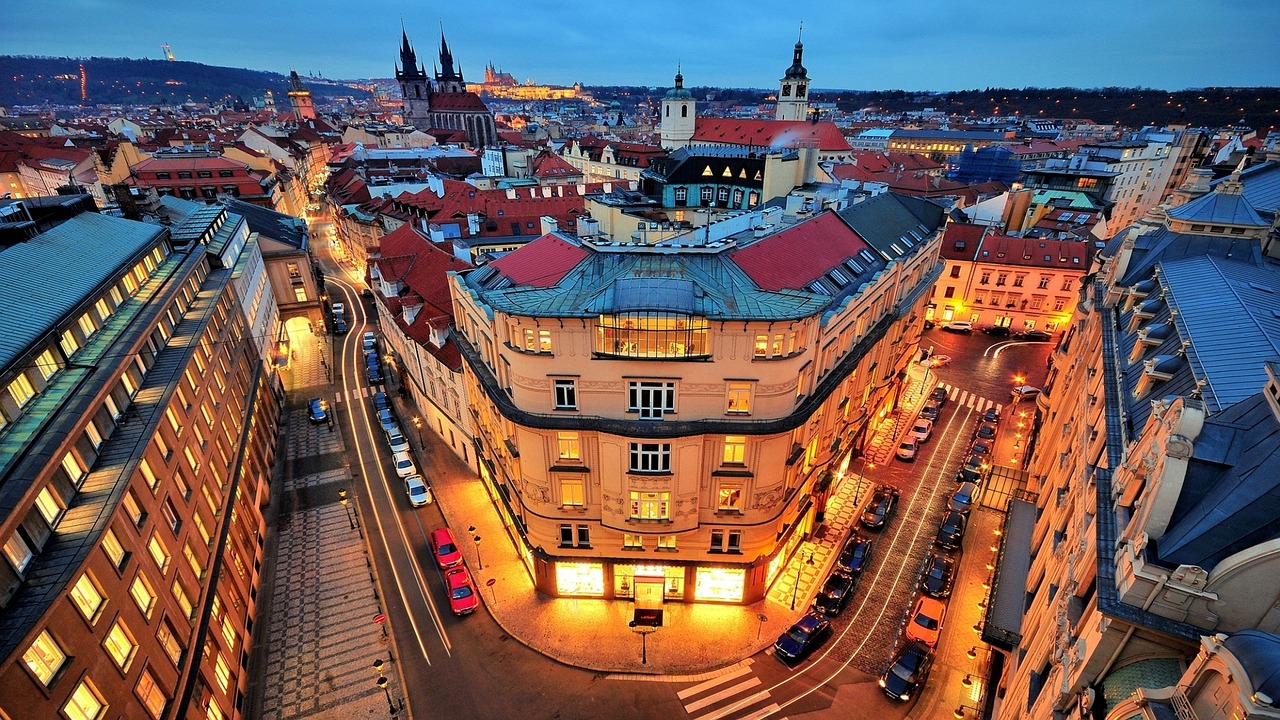
One of the most confusing features of Prague’s streets is the city’s house numbering system. Or more precisely—the fact that most buildings typically display two different number signs in different colors: red and blue. While this system may seem chaotic, it is a combination of ancient history and modern administrative necessity. In fact, understanding the difference between the red and blue numbers is key to navigating the city.
House Numbers on Red Signs: Conscription Numbers
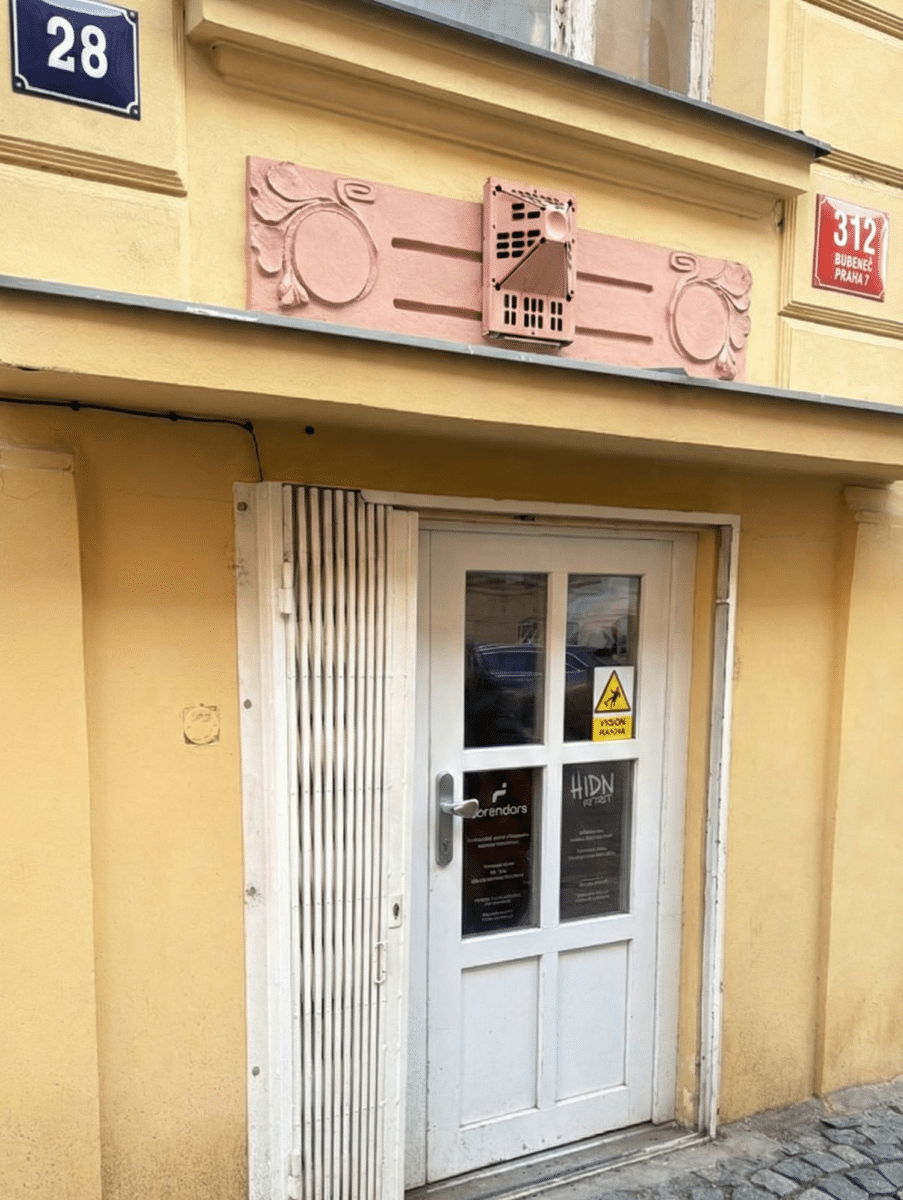
House numbers on red signs are unique to each district (e.g., the entire Old Town) and are assigned to buildings based on the chronological order of their construction. The lower the number on the red sign, the older the building is within that district. As a result, one can encounter interesting phenomena in the city, such as a building with a red number of 10 standing right next to a building numbered 1500—proving that the two buildings were built in vastly different eras.
The red signs represent the older numbering system known as “conscription numbers.” These numbers were introduced in 1770 during the reign of Empress Maria Theresa. The original purpose was not to facilitate mail delivery, but for military conscription and tax collection. The numbering was carried out by soldiers who went from door to door, marking numbers with chalk as they progressed.
Incidentally, before numbers were introduced, houses in Prague were identified using pictorial “house signs.” Since most residents were illiterate, these symbols were essential for identifying buildings. Such signs can still be seen across the city, such as the “House of the Two Suns” (U dvou slunců).
House Numbers on Blue Signs: Orientation Numbers
The house numbers on the blue signs are those familiar to us from most cities around the world, and they have a single purpose: to help people find their way along the street. This system was introduced in Prague in the second half of the 19th century, as part of the city’s integration into the Habsburg Empire. This means that the number on the blue sign indicates the building’s specific location on the street.
In this system, house numbers are sequential along the street, with one side receiving odd numbers and the other even numbers. In Prague, the numbering typically begins at the end of the street closest to the Vltava River or the city center. Therefore, for the average tourist or real estate investor, the house number on the blue sign is the most important and useful one.
Today, Prague authorities maintain both house numbering systems (red and blue) to preserve historical continuity alongside modern efficiency. In cases of official correspondence or legal contracts, it is advisable to use both numbers to avoid errors.